

Fundamental Rights of Children and Elderly Persons | ළමුන්ගේ සහ වැඩිහිටි පුද්ගලයන්ගේ මූලික අයිතිවාසිකම් පිළිබඳ දැනුවත් කිරීමක්
www.bbcmirror.lk
www.Lankawebnews.lk
Human rights are the fundamental rights and freedoms inherent to every person from birth. These rights ensure that individuals can live with dignity, equality, and security. Providing special care and protection to children and elderly persons is a responsibility shared by the State, families, and society.
♦️ Fundamental Rights of Children
A child is defined as any person below the age of 18 years. Sri Lanka has ratified the United Nations Convention on the Rights of the Child (CRC) and is committed to protecting and promoting children’s rights.
🔹 Right to Life and Development
* The right to live in safety and security.
* Access to proper nutrition, healthcare, and care.
* Opportunities for physical, mental, and social development.
🔹 Right to Education
* Access to free basic education.
* Equal opportunities without discrimination.
* Opportunities to develop talents and abilities.
🔹 Right to Protection
* Protection from physical, sexual, and psychological abuse.
* Protection from child labour, child marriage, and exploitation.
* Protection from drugs and other harmful activities.
🔹 Right to Participation
* The right to express opinions freely.
* The opportunity to be heard in matters affecting them.
* Participation in cultural, religious, and recreational activities.
🔹 Right to Identity
* Birth registration.
* The right to a name and nationality.
* The right to live with and maintain relationships with family members.
⚖️ Laws and Protection Mechanisms Relating to Children in Sri Lanka
📌 Constitution of Sri Lanka
* Guarantees equality before the law and fundamental rights for all citizens.
📌 Children and Young Persons Ordinance
* Provides legal provisions for the welfare and protection of children.
📌 National Child Protection Authority Act No. 50 of 1998
* Established the National Child Protection Authority (NCPA) to prevent child abuse and violence.
📌 Penal Code of Sri Lanka
* Prescribes penalties for child abuse, sexual offences, and acts of violence against children.
⸻
👵 Fundamental Rights of Elderly Persons
Persons aged 60 years and above are considered elderly persons. Protecting their dignity, safety, and well-being is the responsibility of families, society, and the State.
🔹 Right to Live with Dignity
* A life free from neglect, abuse, and humiliation.
* Recognition and respect within society.
🔹 Right to Healthcare
* Access to medical treatment and healthcare services.
* Access to mental health and rehabilitation services.
🔹 Right to Social and Economic Security
* Access to pensions and welfare benefits.
* Support for maintaining livelihoods.
* Protection from poverty and abandonment.
🔹 Right to Family and Social Relationships
* Freedom from isolation.
* The right to maintain contact with family members and society.
🔹 Right to Protection from Abuse and Exploitation
* Protection from physical, emotional, and financial abuse.
* Protection from neglect and fraud.
⚖️ Laws Relating to Elderly Persons in Sri Lanka
📌 Protection of the Rights of Elders Act No. 9 of 2000
Under this Act:
* The National Council for Elders and related institutions have been established.
* Measures are taken to promote the welfare and rights of elderly persons.
* Protection and assistance mechanisms are provided for elderly citizens.
📌 Constitution of Sri Lanka
* Guarantees equality before the law and fundamental rights.
📌 Universal Declaration of Human Rights (UDHR)
* Recognizes the dignity and equal rights of all human beings.
📢 A Message to Society
Children and elderly persons are among the most vulnerable groups in society. Protecting their rights is not only a legal obligation but also a moral and humanitarian responsibility.
✔️ Let us provide children with love, protection, and education.
✔️ Let us treat elderly persons with dignity, care, and security.
✔️ Let us stand together against violence, abuse, and discrimination.
“The true measure of a society’s progress lies in how respectfully and safely its children and elderly citizens are able to live.”
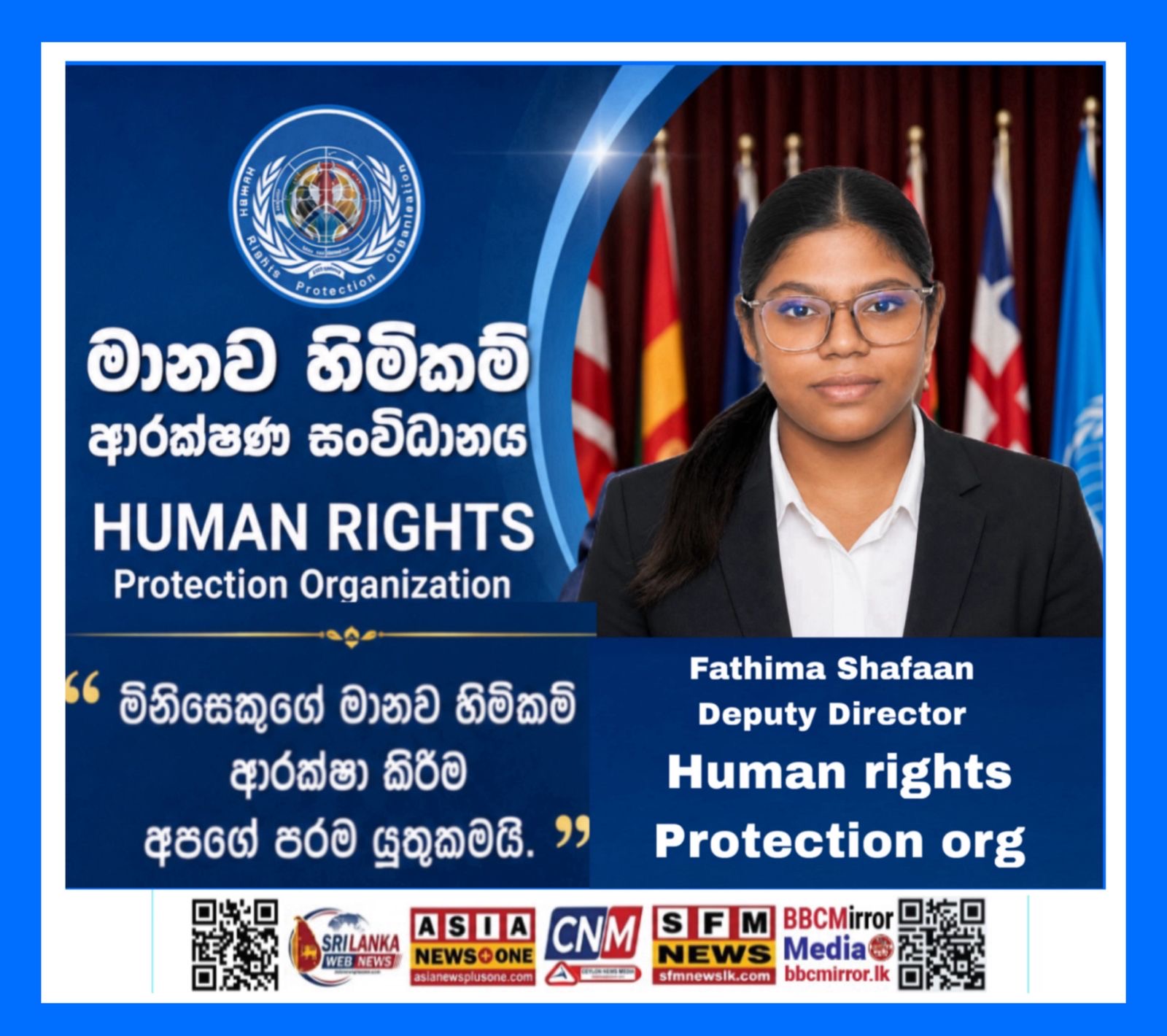
Fathima Shafaan
Deputy Director
Human Rights Protection Organization (HRPO)
ළමුන්ගේ සහ වැඩිහිටි පුද්ගලයන්ගේ මූලික අයිතිවාසිකම් පිළිබඳ දැනුවත් කිරීමක්
BBCMirror.lk
asianewsplusone.com
sfmnewslk.com
මානව හිමිකම් යනු සෑම පුද්ගලයෙකුටම උපතින්ම හිමිවන, ගෞරවයෙන් හා ආරක්ෂාවෙන් ජීවත් වීමට අවශ්ය මූලික අයිතිවාසිකම් වේ. ළමුන්ට මෙන්ම වැඩිහිටි පුද්ගලයන්ටද විශේෂ ආරක්ෂාවක් සහ සැලකිල්ලක් ලබාදීම රාජ්යයේත්, පවුලේත්, සමාජයේත් වගකීමකි.
♦️ළමුන්ගේ මූලික අයිතිවාසිකම්
ළමයෙකු යනු වයස අවුරුදු 18ට අඩු පුද්ගලයෙකි. ශ්රී ලංකාව එක්සත් ජාතීන්ගේ ළමා අයිතිවාසිකම් පිළිබඳ සම්මුතිය (UN Convention on the Rights of the Child – CRC) අනුමත කර ඇති අතර, ඒ අනුව ළමුන්ගේ අයිතිවාසිකම් ආරක්ෂා කිරීම සඳහා බැඳී සිටී.
1. ජීවත්වීමේ සහ සංවර්ධනයේ අයිතිය
* ආරක්ෂිතව ජීවත්වීමට අයිතිය.
* පෝෂණය, සෞඛ්ය සේවා සහ නිසි රැකවරණය ලැබීම.
* ශාරීරික, මානසික සහ සමාජීය සංවර්ධනය සඳහා අවශ්ය පහසුකම් ලැබීම.
1. අධ්යාපනයේ අයිතිය
* නොමිලේ මූලික අධ්යාපනය ලැබීම.
* වෙනස්කම්වලට ලක් නොවී අධ්යාපනය ලැබීම.
* තම හැකියාවන් වර්ධනය කර ගැනීමට අවස්ථාව ලැබීම.
1. ආරක්ෂාවට හිමි අයිතිය
* ශාරීරික, ලිංගික සහ මානසික හිංසනයෙන් ආරක්ෂාව.
* ළමා ශ්රමය, ළමා විවාහ සහ අපයෝජනයෙන් ආරක්ෂාව.
* මත්ද්රව්ය හා අනෙකුත් හානිකර ක්රියාකාරකම්වලින් ආරක්ෂාව.
1. සහභාගිත්වයේ අයිතිය
* තම අදහස් ප්රකාශ කිරීමට අයිතිය.
* තමන්ට බලපාන කාරණාවලදී අදහස් දැක්වීමට අවස්ථාව.
* සංස්කෘතික, ආගමික හා විනෝදාත්මක කටයුතුවලට සහභාගී වීම.
1. අනන්යතාවයේ අයිතිය
* උපත ලියාපදිංචි කිරීම.
* නමක් සහ ජාතිකත්වයක් හිමිවීම.
* පවුල සමඟ ජීවත් වීමට හා සම්බන්ධතා පවත්වා ගැනීමට අයිතිය.
⚖️ ළමුන් සම්බන්ධ ශ්රී ලංකාවේ නීති සහ ආරක්ෂණ ක්රමවේද
📌 ශ්රී ලංකා ආණ්ඩුක්රම ව්යවස්ථාව
* සියලු දෙනාට සමාන ආරක්ෂාව සහ මූලික අයිතිවාසිකම් සහතික කරයි.
📌 ළමා හා තරුණ පුද්ගලයන්ගේ ආඥා පනත (Children and Young Persons Ordinance)
* ළමුන්ගේ සුබසාධනය සහ ආරක්ෂාව සඳහා විධිවිධාන සපයයි.
📌 ජාතික ළමා ආරක්ෂණ අධිකාරී පනත අංක 50 – 1998
* ළමා අපයෝජන හා හිංසන වැළැක්වීම සඳහා ජාතික ළමා ආරක්ෂණ අධිකාරිය (NCPA) ස්ථාපිත කර ඇත.
📌 දණ්ඩ නීති සංග්රහය
* ළමා අපයෝජන, ලිංගික අපරාධ සහ හිංසනයන්ට එරෙහිව දඬුවම් නියම කරයි.
👵 වැඩිහිටි පුද්ගලයන්ගේ මූලික අයිතිවාසිකම්
වයස අවුරුදු 60 හෝ ඊට වැඩි පුද්ගලයන් වැඩිහිටි පුද්ගලයන් ලෙස සැලකේ. ඔවුන්ගේ ගෞරවය, ආරක්ෂාව සහ යහපැවැත්ම ආරක්ෂා කිරීම පවුලේ, සමාජයේ සහ රාජ්යයේ වගකීමකි.
1. ගෞරවයෙන් ජීවත්වීමේ අයිතිය
* අපහාස, හිංසන සහ අතහැර දැමීම්වලින් තොර ජීවිතයක්.
* සමාජයේ ගෞරවයෙන් පිළිගැනීම.
1. සෞඛ්ය සේවා ලැබීමේ අයිතිය
* වෛද්ය ප්රතිකාර සහ සෞඛ්ය පහසුකම්.
* මානසික සෞඛ්ය සහ පුනරුත්ථාපන සේවා.
1. සමාජ ආරක්ෂාව සහ ආර්ථික ආරක්ෂාව
* විශ්රාම වැටුප් හා දීමනා.
* ජීවනෝපාය සඳහා සහාය.
* දුප්පත්කමෙන් සහ අතහැර දැමීම්වලින් ආරක්ෂාව.
1. පවුල හා සමාජය සමඟ සම්බන්ධතා පවත්වා ගැනීමේ අයිතිය
* හුදකලා නොකිරීම.
* පවුලේ සාමාජිකයන් සමඟ සම්බන්ධතා පවත්වා ගැනීම.
1. හිංසනයෙන් හා අපයෝජනයෙන් ආරක්ෂාව
* ශාරීරික, මානසික සහ මූල්ය අපයෝජනයෙන් ආරක්ෂාව.
* නොසලකා හැරීම හා වංචාවෙන් ආරක්ෂාව.
⚖️ වැඩිහිටි පුද්ගලයන් සම්බන්ධ ශ්රී ලංකාවේ නීති
📌 වැඩිහිටි තැනැත්තන්ගේ අයිතිවාසිකම් ආරක්ෂා කිරීමේ පනත අංක 9 – 2000
මෙම පනත යටතේ:
* ජාතික වැඩිහිටි මහලේකම් කාර්යාලය සහ ජාතික වැඩිහිටි සභාව ස්ථාපිත කර ඇත.
* වැඩිහිටි පුද්ගලයන්ගේ සුබසාධනය හා අයිතිවාසිකම් ප්රවර්ධනය කරයි.
* වැඩිහිටි පුද්ගලයන්ට ආරක්ෂාව සහ සහන සැලසීම සඳහා ක්රියාමාර්ග ගෙන ඇත.
📌 ශ්රී ලංකා ආණ්ඩුක්රම ව්යවස්ථාව
* නීතිය ඉදිරියේ සමානාත්මතාවය සහ මූලික අයිතිවාසිකම් සහතික කරයි.
📌 මානව හිමිකම් පිළිබඳ විශ්ව ප්රකාශනය (Universal Declaration of Human Rights – UDHR)
* සියලු පුද්ගලයන්ගේ ගෞරවය සහ සමාන අයිතිවාසිකම් පිළිගනී.
📢 කරුණික පණිවිඩයක්
ළමුන් සහ වැඩිහිටි පුද්ගලයන් යනු සමාජයේ වඩාත් සංවේදී කණ්ඩායම් දෙකකි. ඔවුන්ගේ අයිතිවාසිකම් ආරක්ෂා කිරීම නීතිමය වගකීමක් පමණක් නොව, මානවීය හා සදාචාරාත්මක වගකීමක් ද වේ.
✔️ ළමයින්ට ආදරය, ආරක්ෂාව සහ අධ්යාපනය ලබාදෙමු.
✔️ වැඩිහිටියන්ට ගෞරවය, සැලකිල්ල සහ සුරක්ෂිතභාවය ලබාදෙමු.
✔️ හිංසනය, අපයෝජනය සහ වෙනස්කම්වලට එරෙහිව එකමුතුව ක්රියා කරමු.
“සමාජයක සැබෑ සංවර්ධනය මැනිය හැක්කේ එහි ළමුන් සහ වැඩිහිටි පුද්ගලයන් කෙතරම් ගෞරවයෙන් සහ ආරක්ෂාවෙන් ජීවත් වන්නේද යන්න මතය.”
ෆාතිමා ෂෆාන්
නියෝජ්ය අධ්යක්ෂිකා
මානව හිමිකම් ආරක්ෂණ සංවිධාණය
(Human Rights Protection Org