

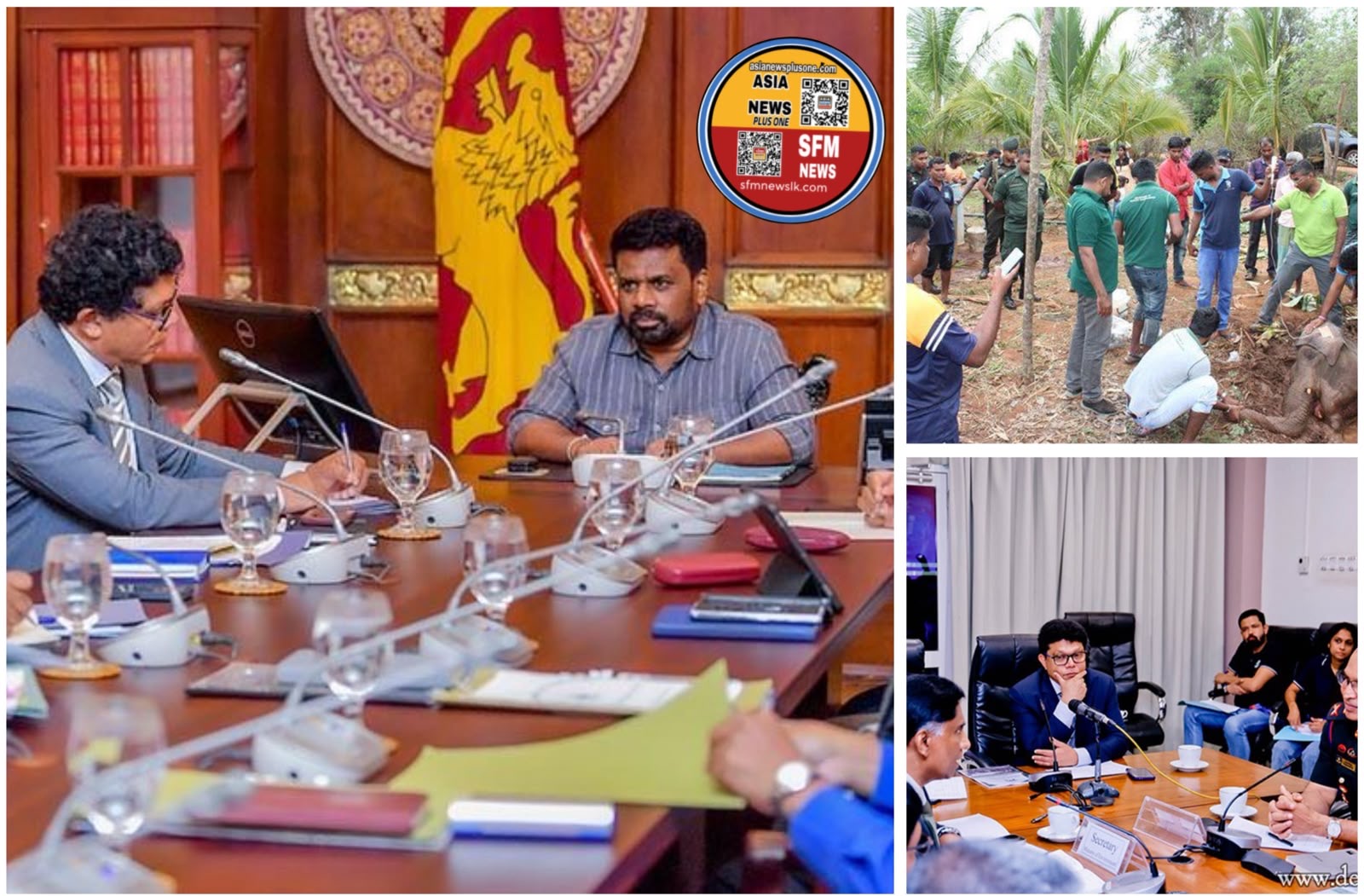
“Sri Lanka Army Strengthens Efforts to Safeguard Wild Elephants Amid Growing Human-Elephant Conflict”
www.bbcmirror.lk
www.Lankawebnews.lk
(By Lieutenant Duminda Senarath)
Tri-Services coordination, search operations, veterinary assistance and technological support highlight the Army’s contribution to wildlife conservation and the protection of Sri Lanka’s natural heritage.
The Sri Lanka Army is strengthening its contribution to wildlife conservation through coordinated efforts with the Sri Lanka Navy, Sri Lanka Air Force, Department of Wildlife Conservation and veterinary authorities to safeguard wild elephants and address the growing challenge of human-elephant conflict in Sri Lanka. Through manpower, technical assistance, logistical support and joint field operations, the Army continues to support national efforts aimed at protecting elephants while promoting the safe coexistence of people and wildlife.
Sri Lanka’s wild elephants are an integral part of the country’s natural heritage and ecological balance. However, the increasing interaction between human settlements and elephant habitats has created significant challenges for both conservation and public safety. Incidents involving injured elephants, damage to agricultural land and the loss of human and animal lives have highlighted the need for a coordinated and sustainable approach.
Recognising this importance, the Army has extended its support to civilian authorities in conservation-related activities. Recent operations involving the search for the wild tusker ‘Agbo’, assistance provided to the elephant ‘Kawanthissa’ and the rescue of an injured elephant calf demonstrate the practical contribution of military personnel.
A significant development emerged during a meeting held at the Ministry of Environment on 23 October 2026. Chaired by Environment Minister Dr. Dhammika Patabendi, with Defence Secretary Air Vice Marshal Sampath Thuyacontha (Retd) and Army Commander Lt. Gen. K.V.N.P. Premarathne, the meeting discussed a coordinated Tri-Services approach to strengthen elephant protection. The discussions focused on improving cooperation among institutions responsible for wildlife conservation, public safety and emergency response.
One principal proposal was the establishment of a dedicated Operations Centre at Army Headquarters. The proposed centre will facilitate coordination among the Tri-Services, Department of Wildlife Conservation and veterinary specialists, enabling information to be shared more effectively and assistance to be organised when incidents involving wild elephants are reported. Such a mechanism could help organise search operations, deploy support teams and facilitate timely responses when elephants are injured or missing. The initiative also envisages specialised training for military personnel in collaboration with wildlife authorities to ensure personnel understand wildlife behaviour, maintain safe distances and follow the instructions of veterinary professionals.
The Army’s contribution has already been demonstrated in the field. In October 2026, troops of the 21 Infantry Division joined wildlife officials in a search operation to locate the wild tusker ‘Agbo’. The operation was supported by drone technology, which provided aerial observation to assist ground teams across challenging terrain. Agbo was subsequently located in the Nachchaduwa Tank Reserve in good health, bringing a positive outcome and highlighting the value of timely coordination and technology.
In another significant contribution, the Army deployed a specialised team of 25 personnel to assist with the medical care of the elephant ‘Kawanthissa’, following a request from the Ministry of Environment and a directive from the Ministry of Defence. The treatment of an injured wild elephant presents considerable challenges, requiring additional manpower, logistics and security support, especially in remote areas. Military personnel assisted veterinary surgeons by organising activities, transporting equipment and maintaining suitable conditions for treatment, allowing specialists to concentrate on medical care.
Similarly, on 16 August 2026, personnel of the 57 Infantry Division, particularly the 571 Infantry Brigade, extended assistance to Tri-Service veterinary surgeons during an operation to rescue and treat an injured wild elephant calf. Such rescue operations require careful planning under the guidance of qualified professionals, and military support provides additional personnel and access to difficult locations.
While rescue operations are essential, the broader challenge requires a comprehensive approach. Human-elephant conflict affects communities through crop damage and threats to safety, while elephants face risks from habitat fragmentation and restricted movement corridors. Addressing these problems requires long-term cooperation to protect habitats, manage electric fences safely and strengthen community awareness.
The use of technology, as demonstrated in the search for Agbo, shows potential to support conservation when guided by wildlife specialists to avoid disturbing animals. The proposed Operations Centre could provide a framework for coordinating such resources in the future.
Although institutional cooperation is important, sustainable protection also depends on community participation. Residents possess valuable knowledge of local conditions and elephant movements, and public awareness programmes can help communities respond safely by maintaining distance and promptly informing wildlife authorities.
The Army’s recent involvement reflects the contribution that military resources can make to wildlife conservation. These activities demonstrate the value of cooperation between the Tri-Services, the Department of Wildlife Conservation and veterinary professionals. Through responsible cooperation, the Sri Lanka Army can continue to support wildlife authorities while contributing to the protection of Sri Lanka’s natural heritage. Ultimately, safeguarding wild elephants is a shared national responsibility.